
Melbourne Translation Services » Melbourne Arabic Translator
Melbourne Arabic Translator
 Get certified Arabic translation from NAATI certified Arabic translators in Melbourne. Our NAATI Arabic translators provide both English to Arabic translation and Arabic to English translation for all types of documents.
- Melbourne migration translation
- Melbourne legal translation
- Melbourne technical document translation
- Melbourne financial document translation
- Melbourne advertising and marketing translations
Get a quote for your Arabic translation services using the form on this page or email us directly.
Upload documents for review and quote
Melbourne Arabic Translation Service
 Our Arabic translators offer a fast translation services for all types of documents. You can use the form on this page to upload multiple files for a confirm quote and delivery time. Our Arabic translator is ready to assist you.
- Delivering quality translations in Australia since 2011
- High quality team of senior NAATI certified translators
- Experienced in delivering multilingual projects with design component
- Local support for Melbourne and Australia-Wide
Melbourne NAATI Translation Services
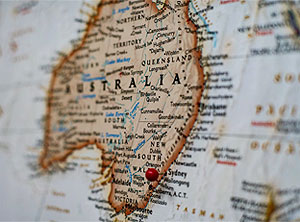
Melbourne is the coastal capital of the southeastern Australian state of Victoria. At the city's centre is the modern Federation Square development, with plazas, bars, and restaurants by the Yarra River. In the Southbank area, the Melbourne Arts Precinct is the site of Arts Centre Melbourne – a performing arts complex – and the National Gallery of Victoria, with Australian and indigenous art.
Certified Arabic translation of the following types of documents are prepared by our experienced NAATI certified Arabic translators:
- Arabic death certificate translation
- Arabic degree translation
- Arabic diploma translation
- Arabic divorce certificate translation
- Arabic driver licence translation
- Arabic employment record translation
- Arabic financial document translations such as bank statements
- Arabic legal contract translation
- Arabic marriage certificate translation
- Arabic medical report translation
- Arabic name-change certificate translation
- Arabic passport translation
- Arabic personal letters and cards
- Arabic police check translation
- Arabic police report translation
- Arabic school transcript translation
- Arabic utility bill translations
- Wills and Power of Attorney translation
Arabic Business Translation Services

- Arabic brochure translation
- Arabic website translation
- Arabic marketing translation
- Arabic technical translation
- Arabic medical translation
About the Arabic Language
Arabic is a name applied to the descendants of the Classical Arabic language of the 6th century AD, used most prominently in the Quran, the Islamic Holy Book. This includes both the literary language (Modern Standard Arabic or Literary Arabic, used in most written documents as well as in formal spoken occasions, such as lectures and radio broadcasts) and the spoken Arabic varieties, spoken in a wide arc of territory stretching across the Middle East and North Africa. Arabic is a Central Semitic language, closely related to Hebrew and the Neo-Aramaic languages, and also related to the South Semitic languages.
Arabic Community in Australia
Arabic is Australia's third most widely spoken language other than English, reflecting decades of migration from across the Arab world. The community is not monolithic: Lebanese migration from the 1970s and earlier produced Australia's oldest and most established Arabic-speaking communities, concentrated in Sydney's southwest. More recent arrivals include Iraqis and Syrians who came through humanitarian channels following conflicts in those countries, Egyptians and Sudanese through skilled and family visa programs, and Saudis and Emiratis present largely as students and business visitors. Because Arabic speakers originate from more than 20 countries, their document translation needs and the authentication requirements for those documents vary considerably. Lebanon, Egypt, Jordan, and Morocco are all Hague Apostille Convention members; Iraq, Syria, Yemen, and Libya are not — documents from those countries require individual country-specific authentication pathways. This is important to confirm before lodging any visa application, and your registered migration agent should be consulted on the authentication chain for your specific country of origin. Arabic script is written right-to-left and comes in Modern Standard Arabic (used in formal documents, government records, and media) and a wide range of spoken dialects. NAATI-certified Arabic translators work from Modern Standard Arabic as it appears in official documents; dialect knowledge is less relevant for document translation but important for interpreting. Translators do not transliterate Arabic names — the English rendering of Arabic names in official documents follows established transliteration standards that may differ from a person's preferred English spelling.
